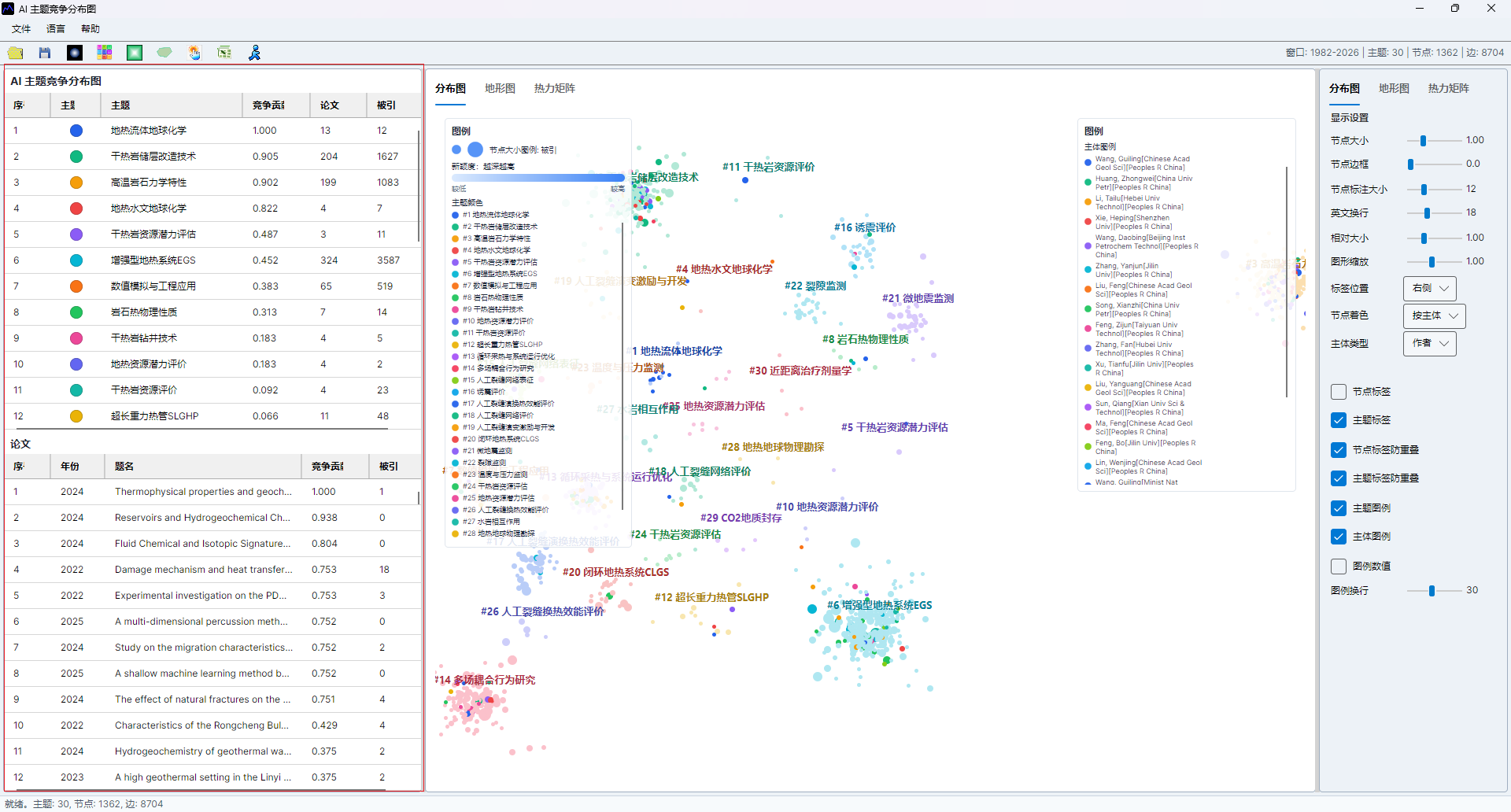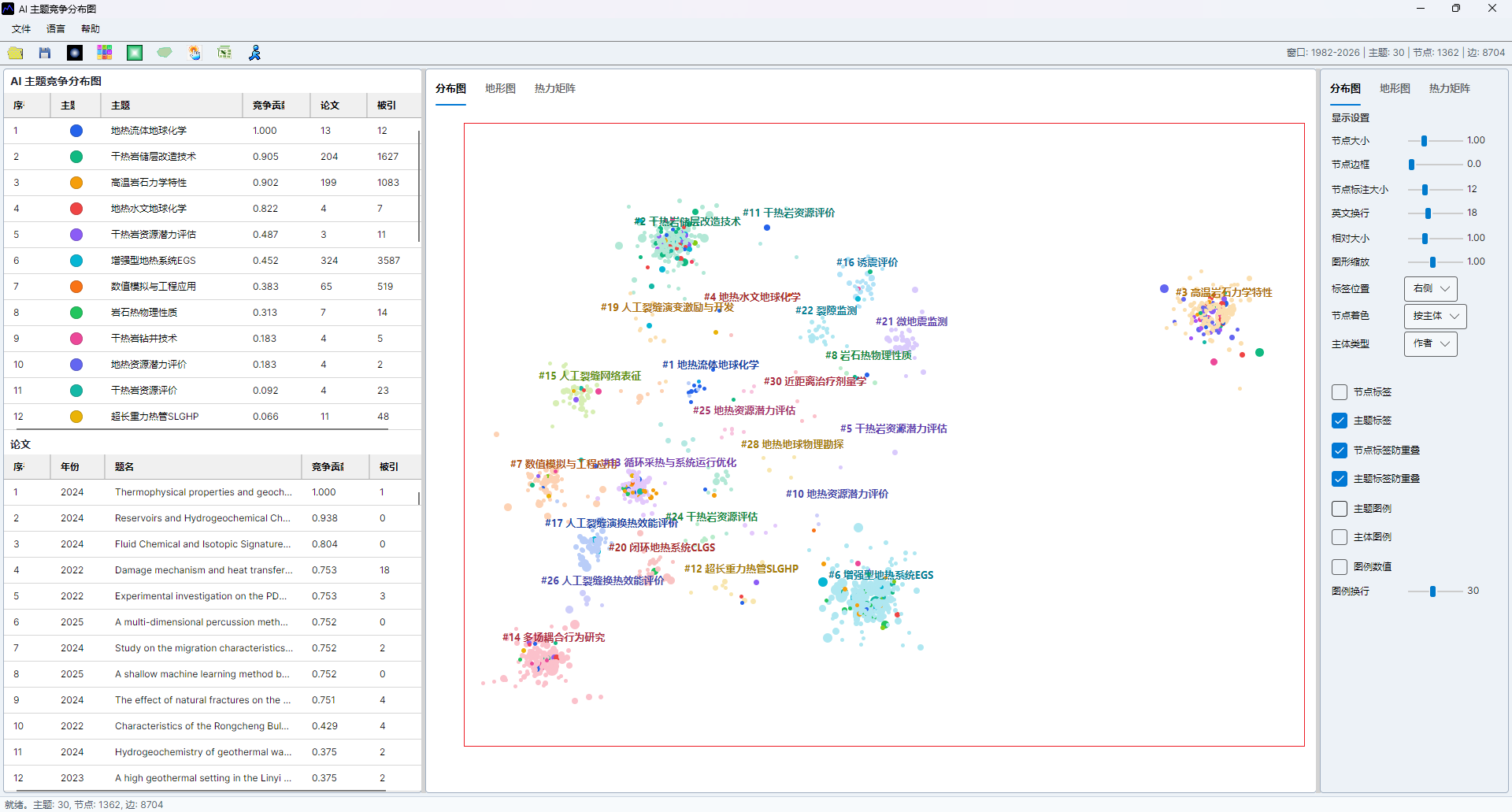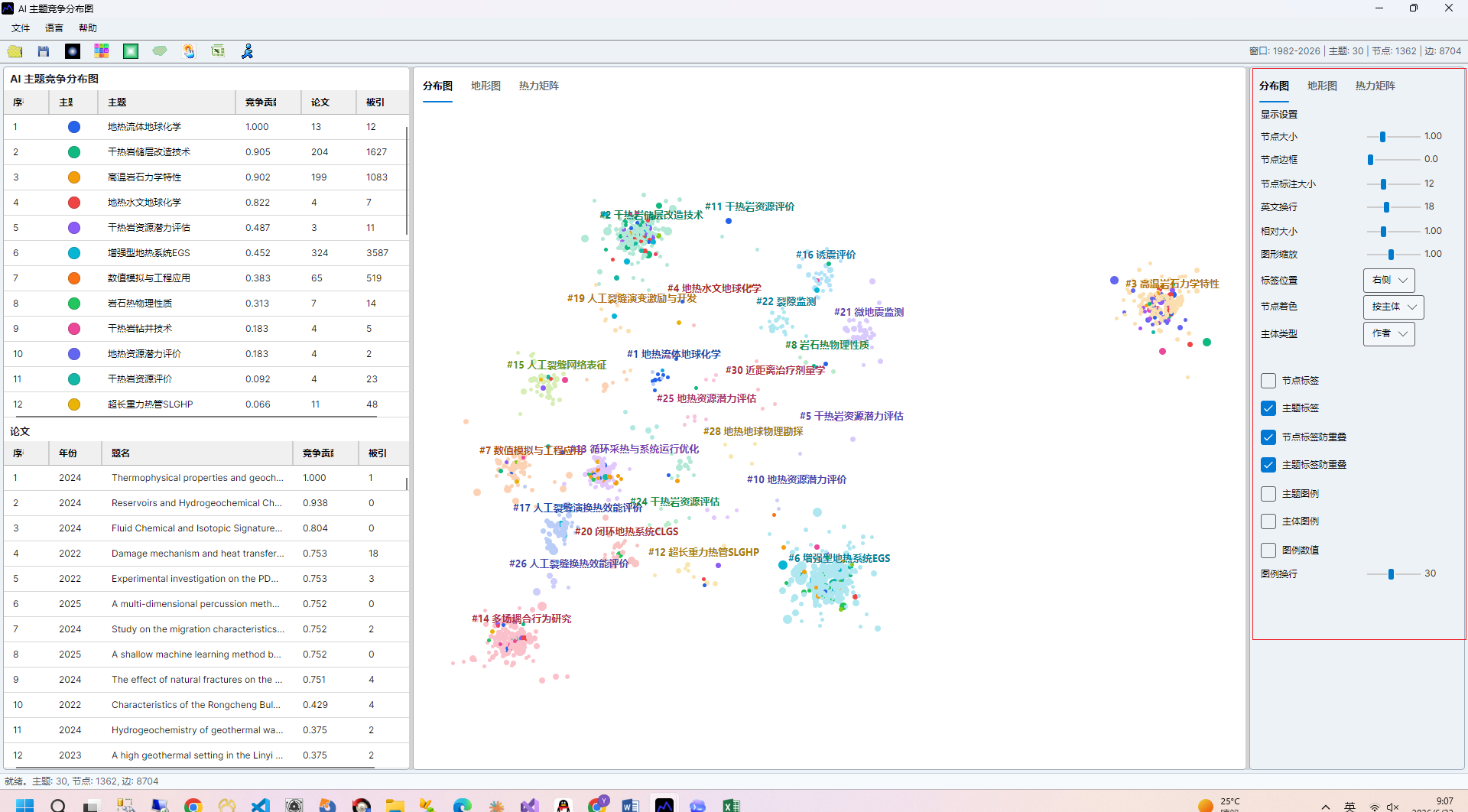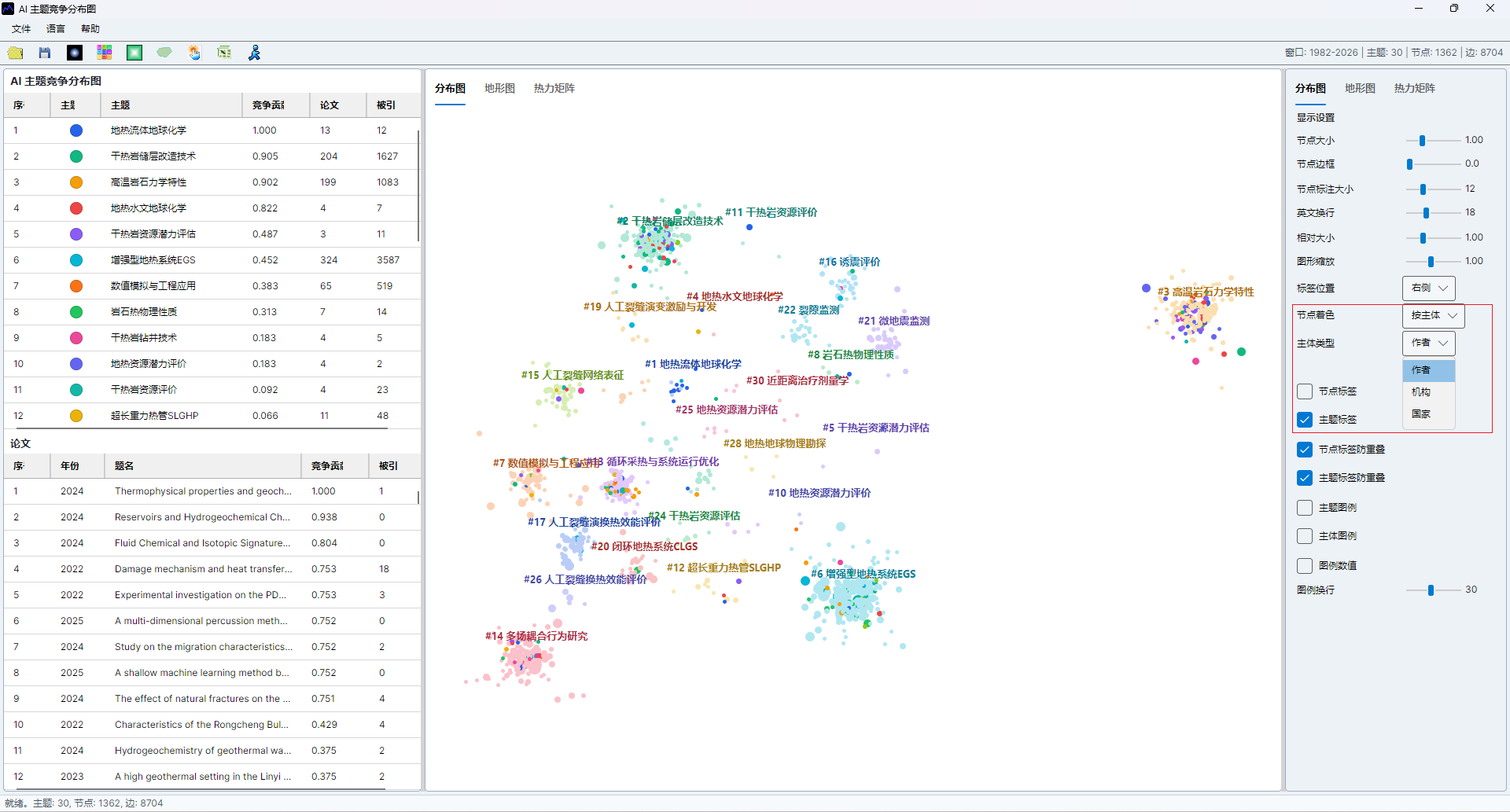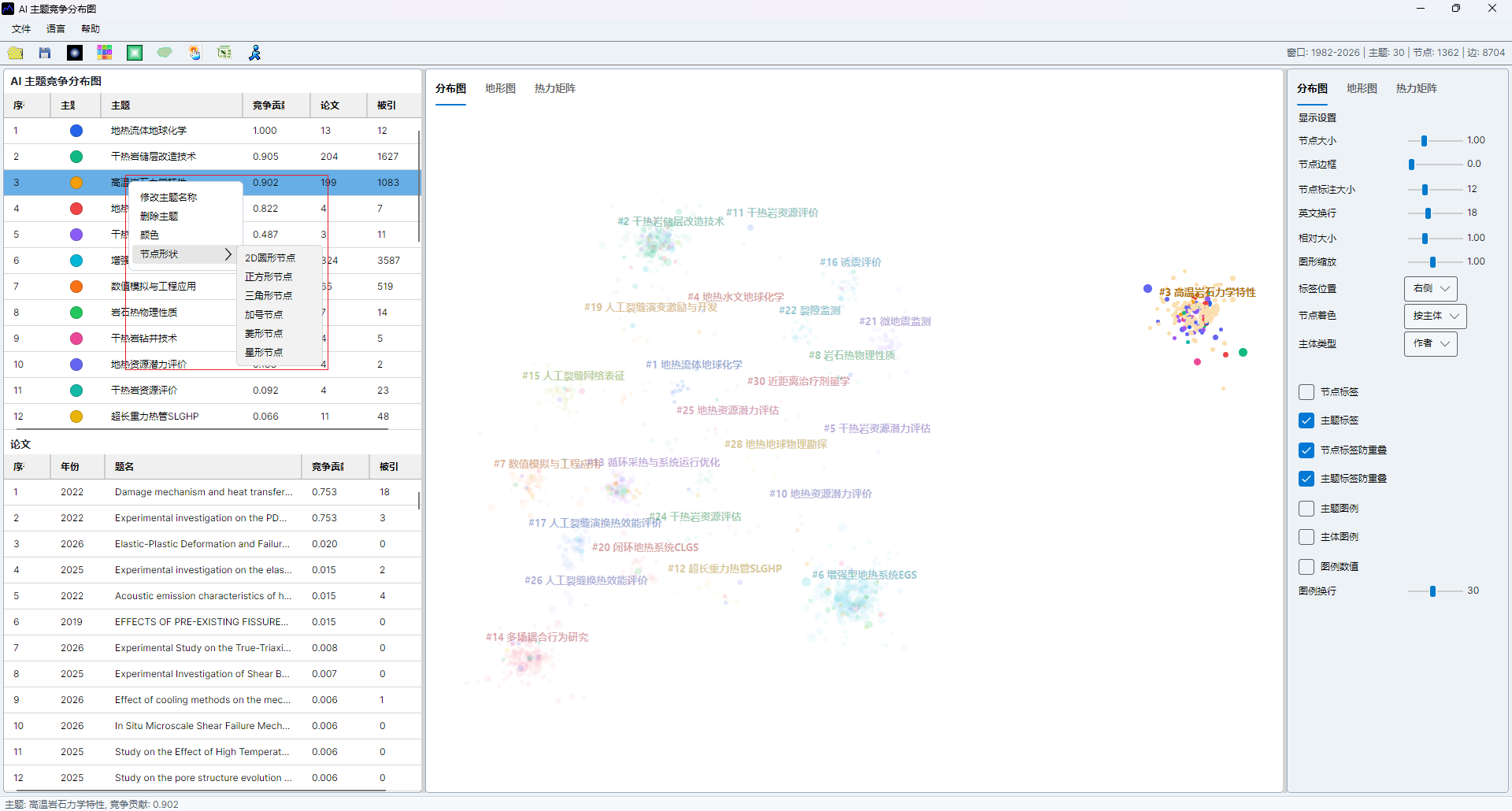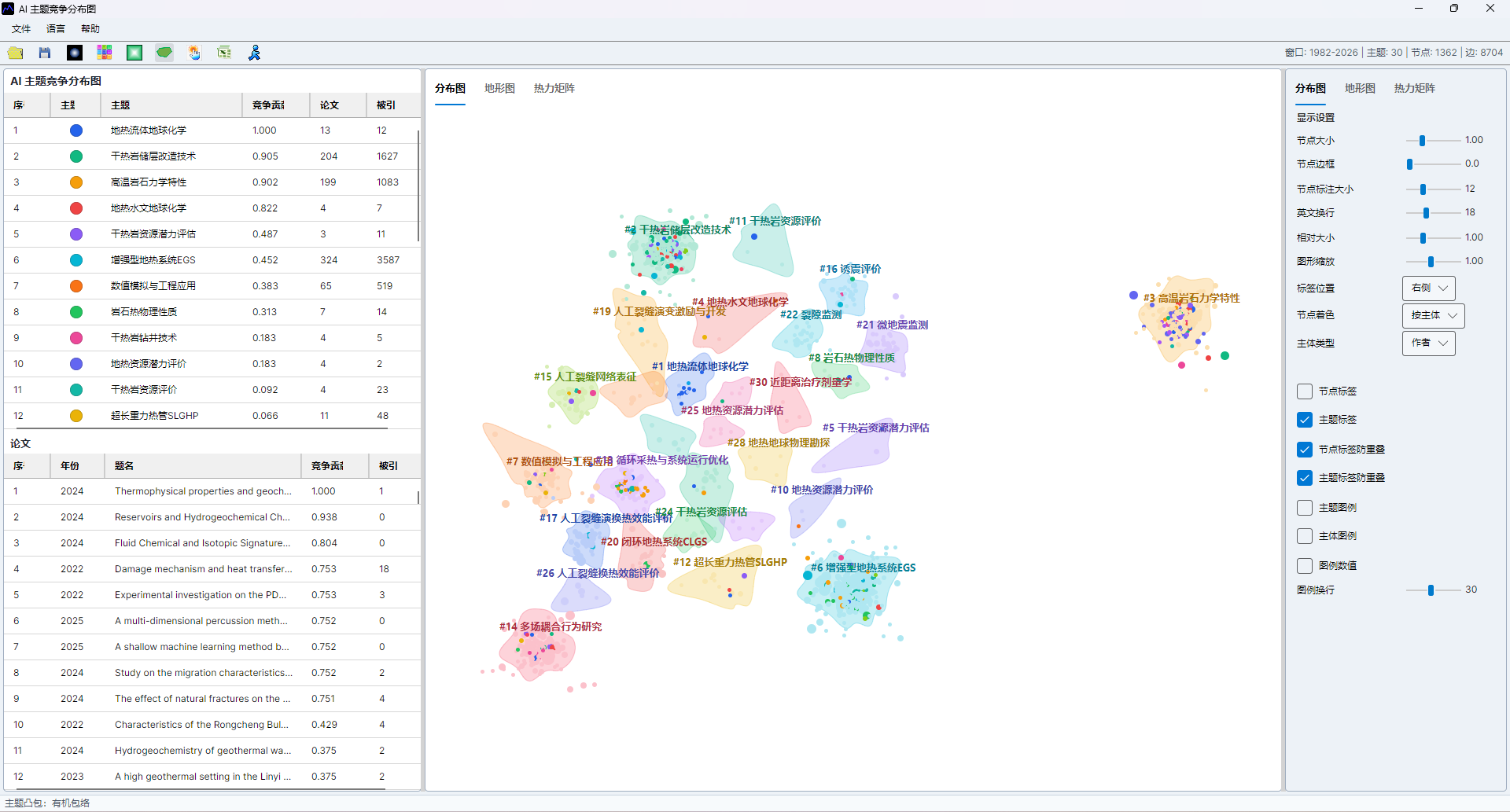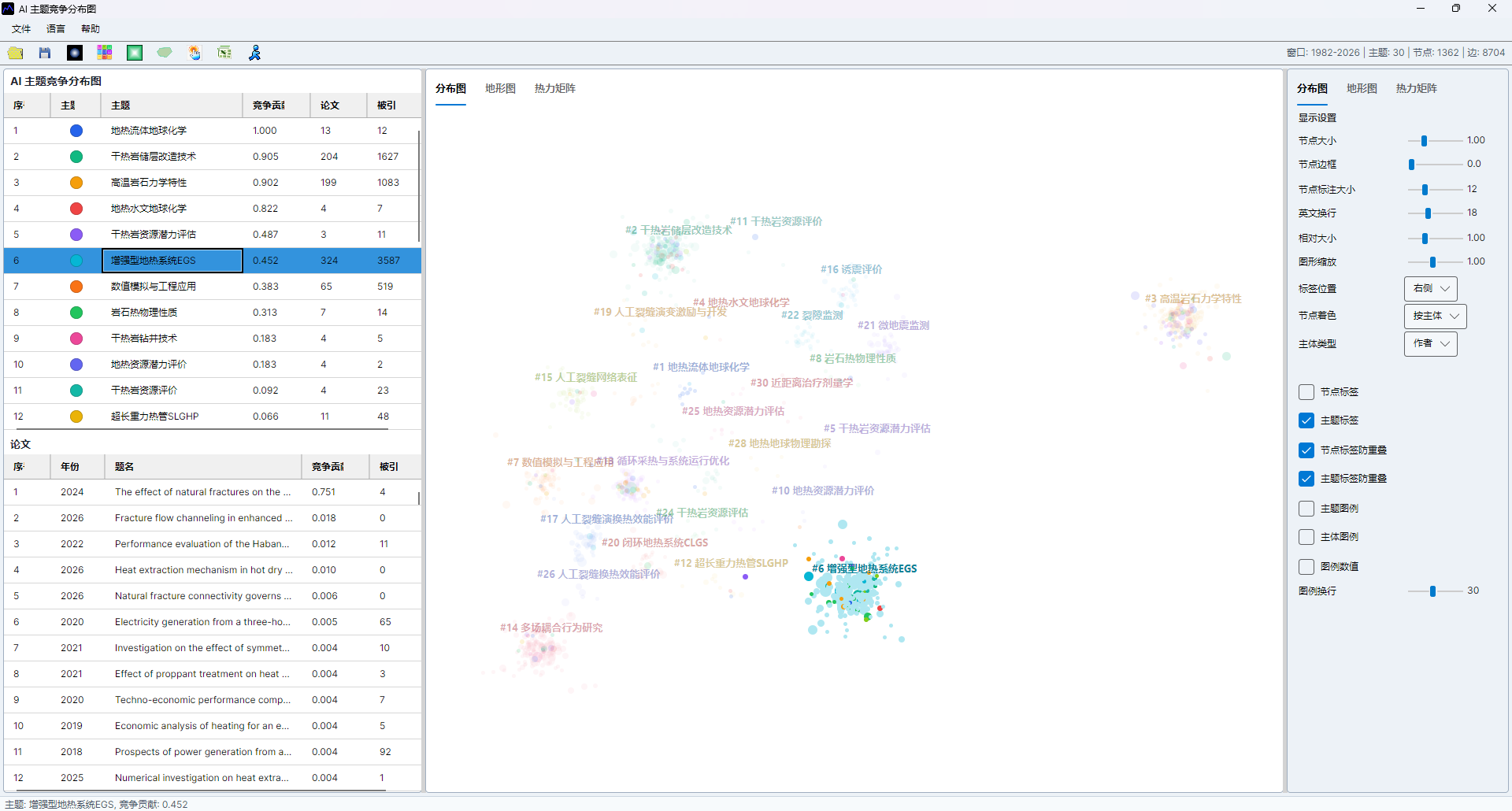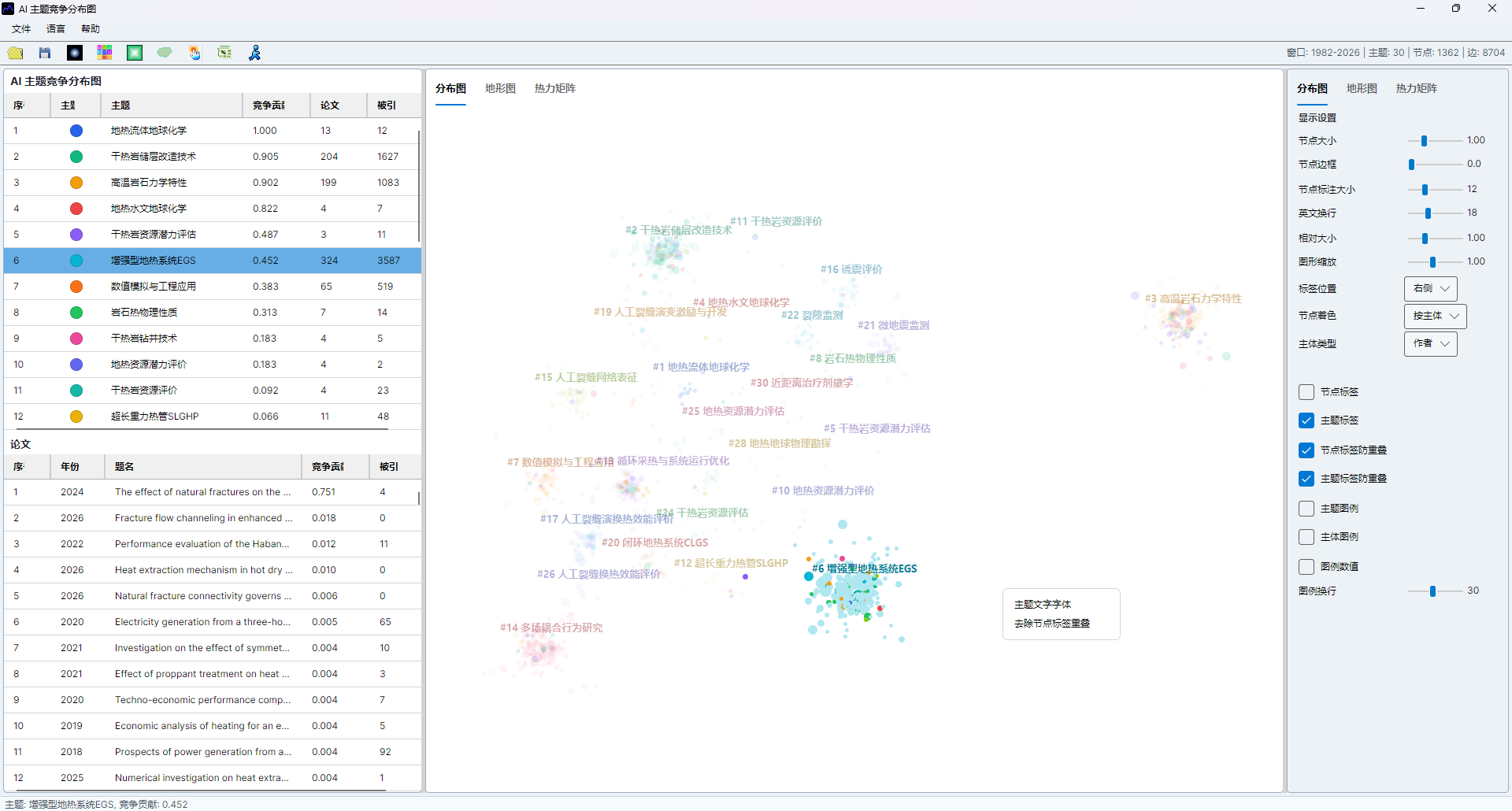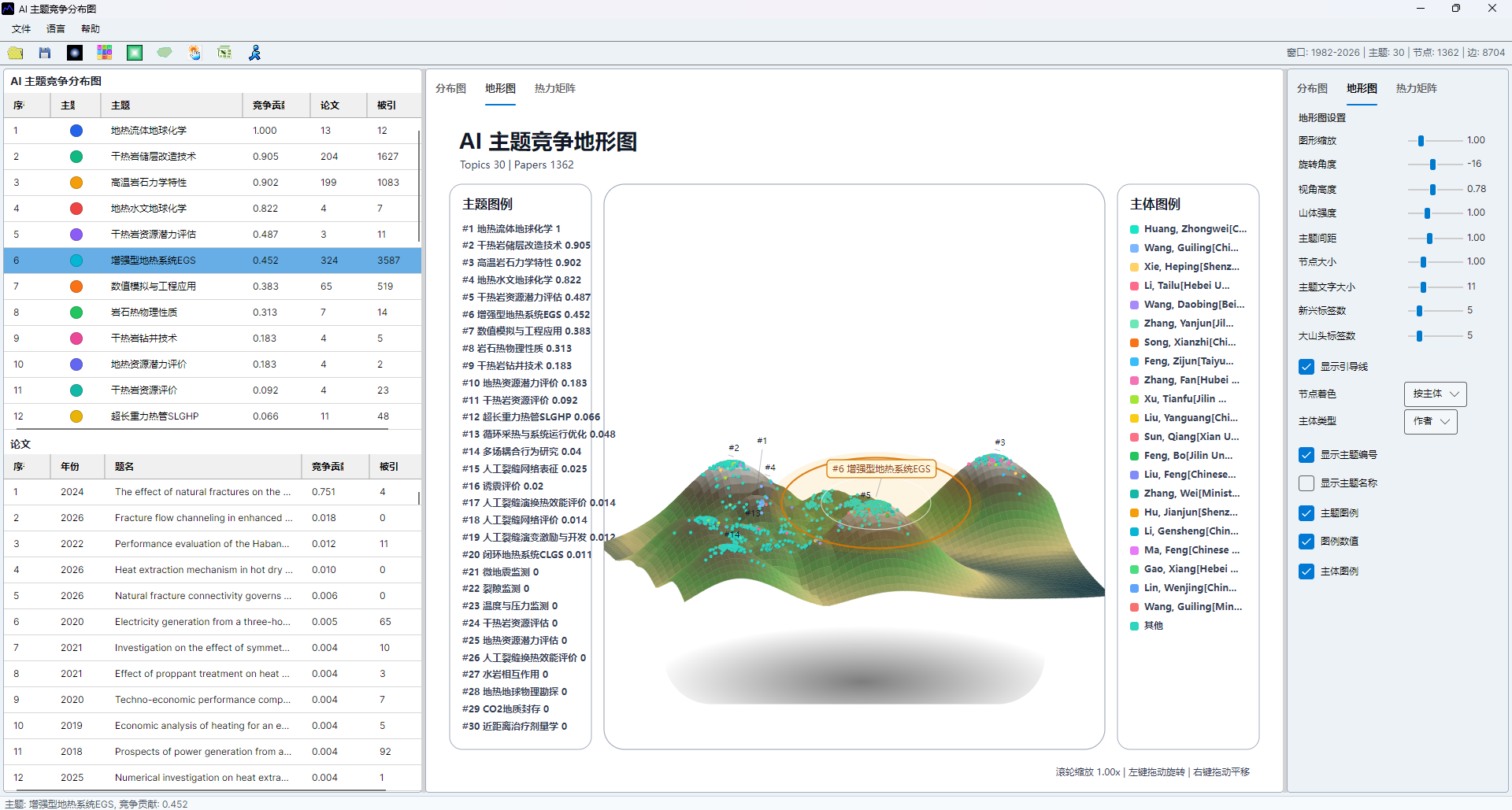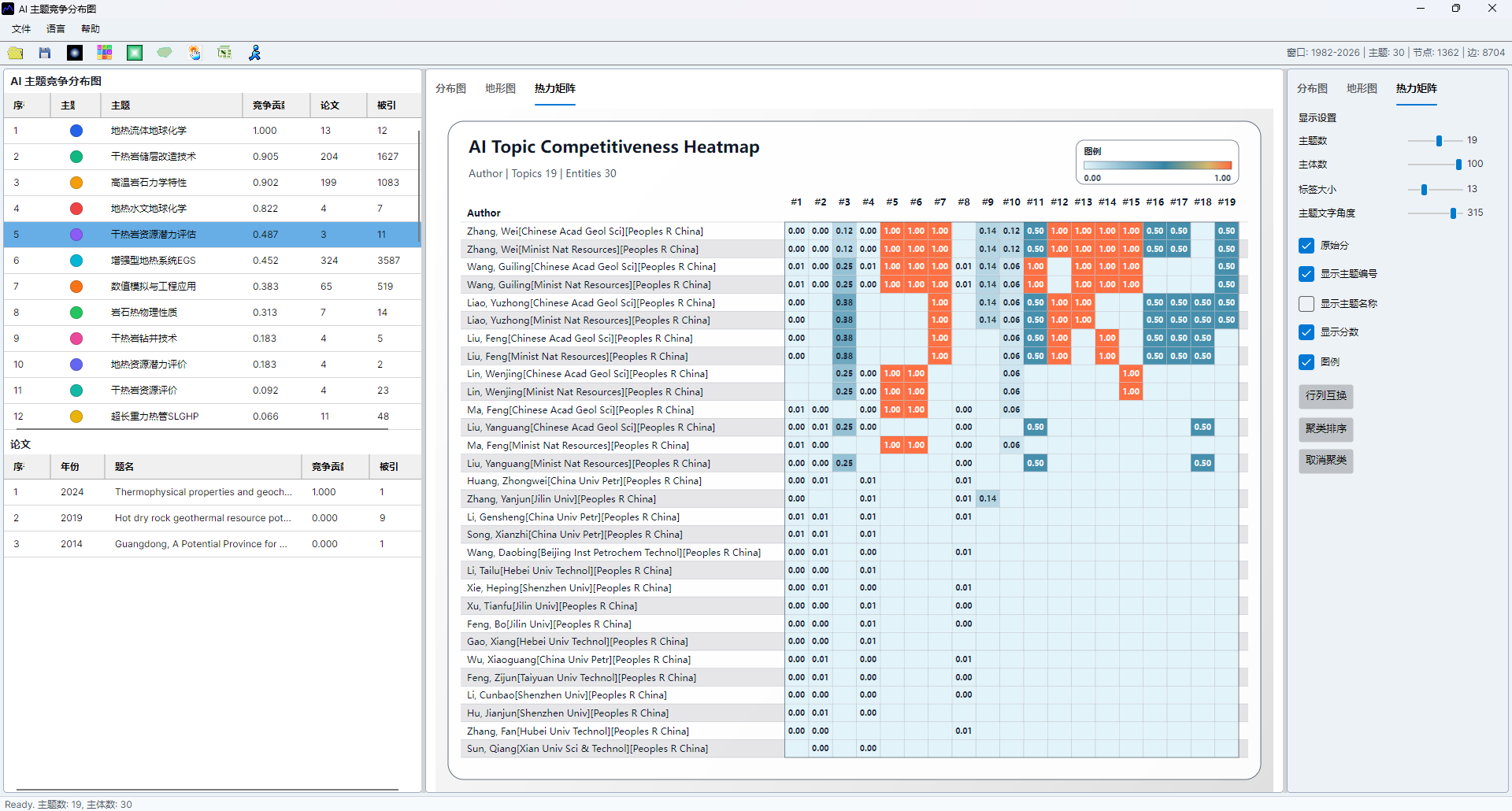
AI Topic Competitiveness Distribution Map
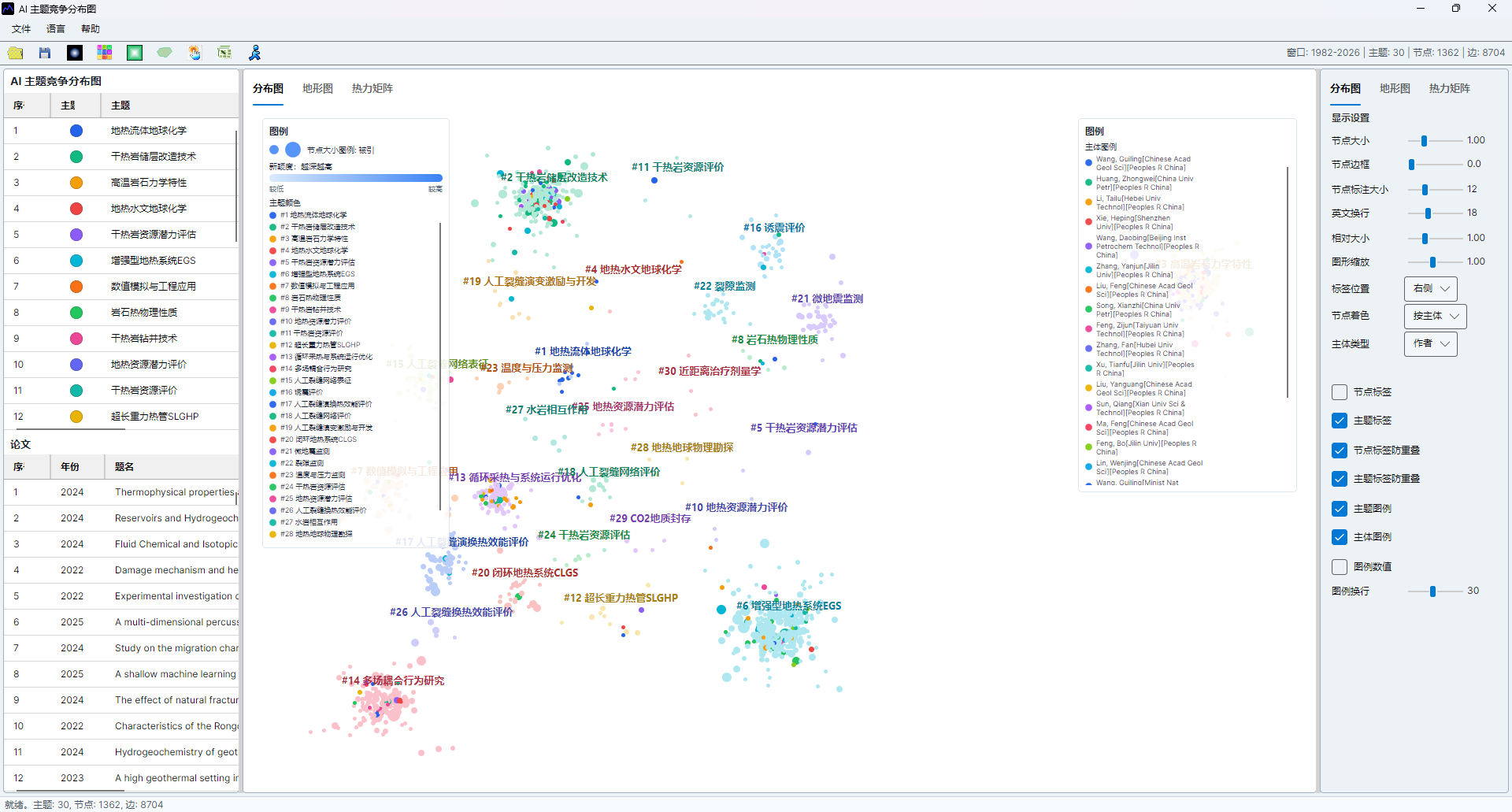
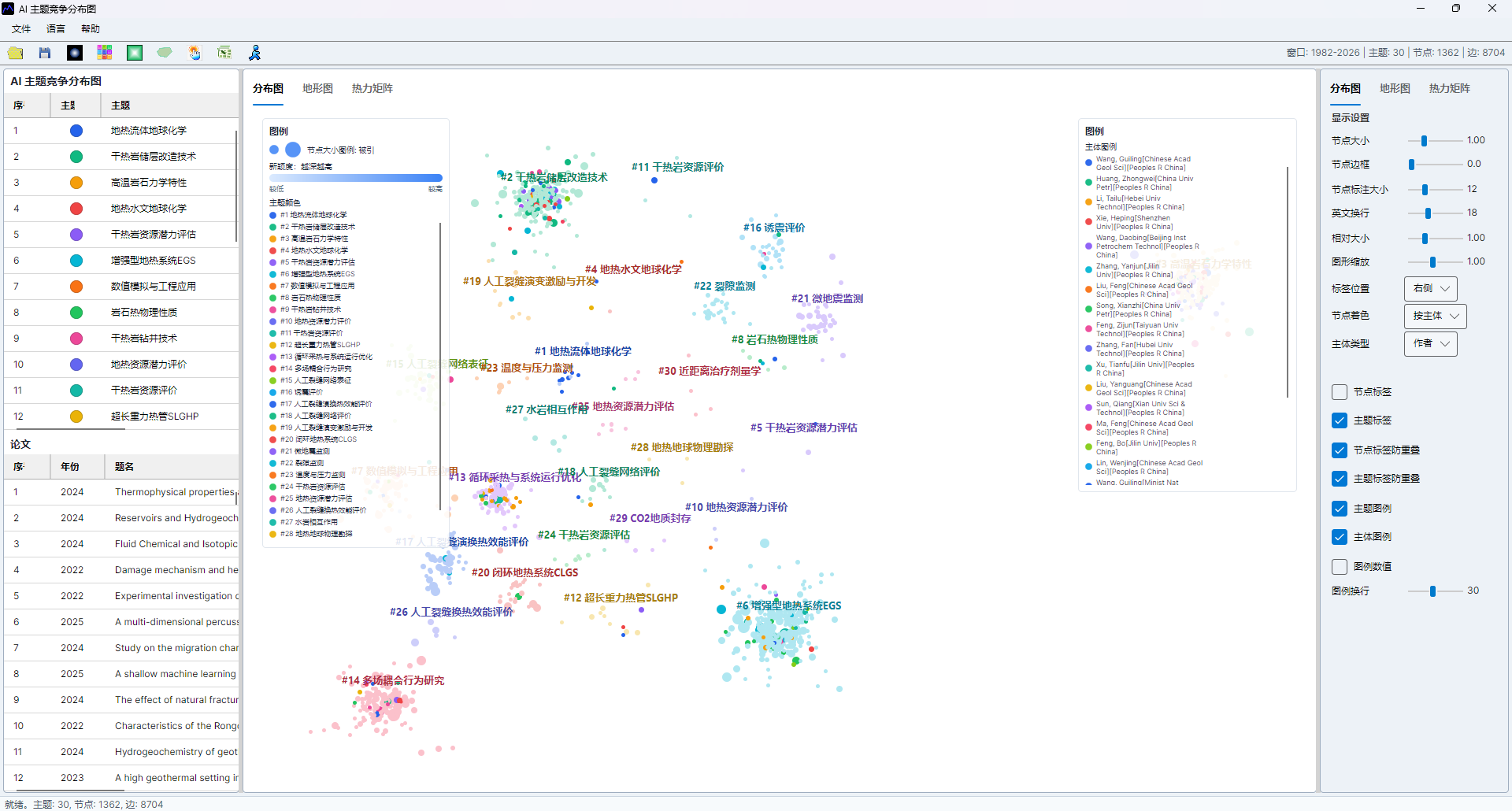
The AI topic competitiveness distribution map shows how institutions, authors, or other subjects are positioned across AI topics. It is useful for comparing strengths, identifying benchmark subjects, and explaining topic-level competitive structure.
Before You Start
- Import the literature dataset.
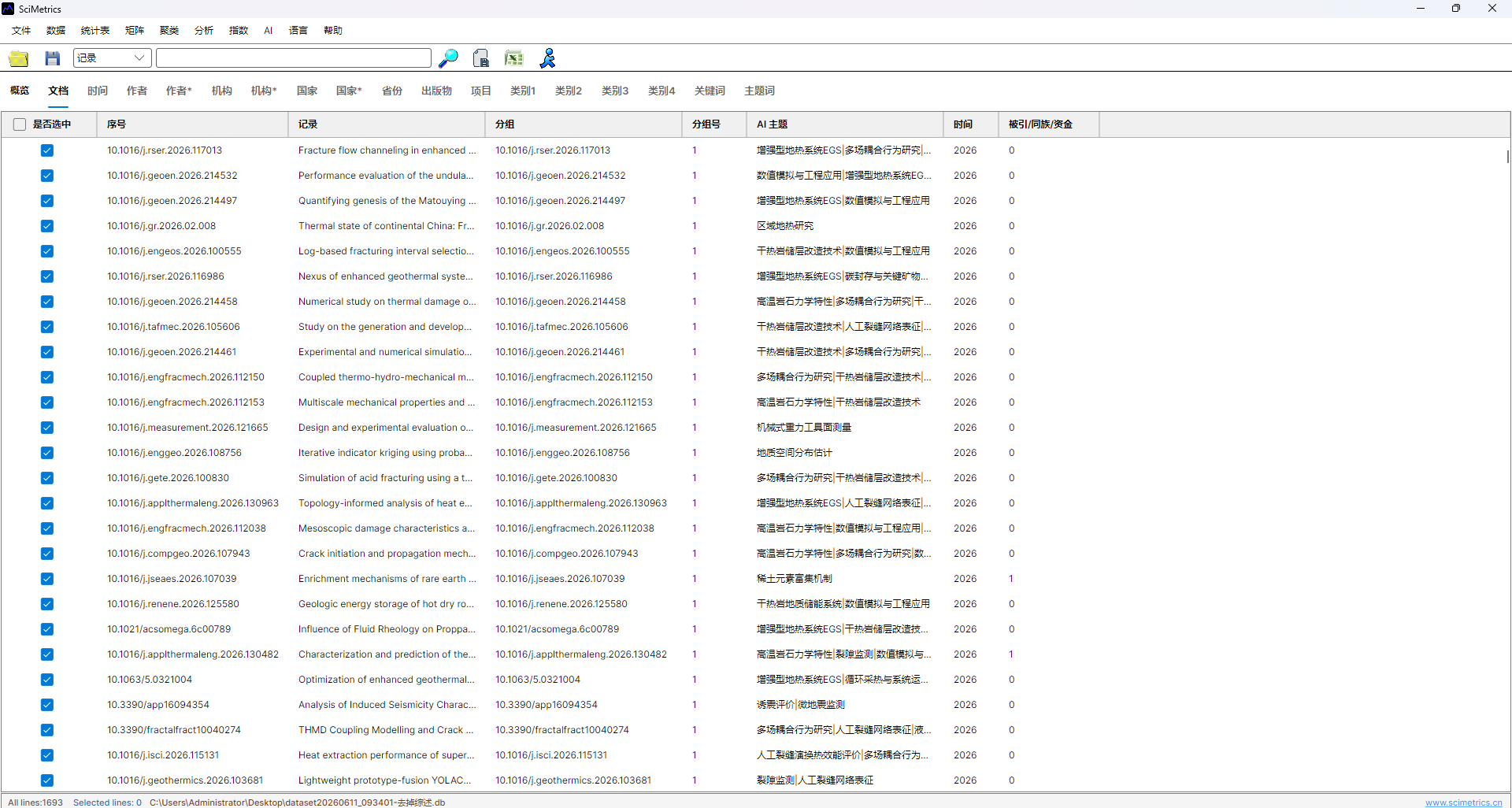
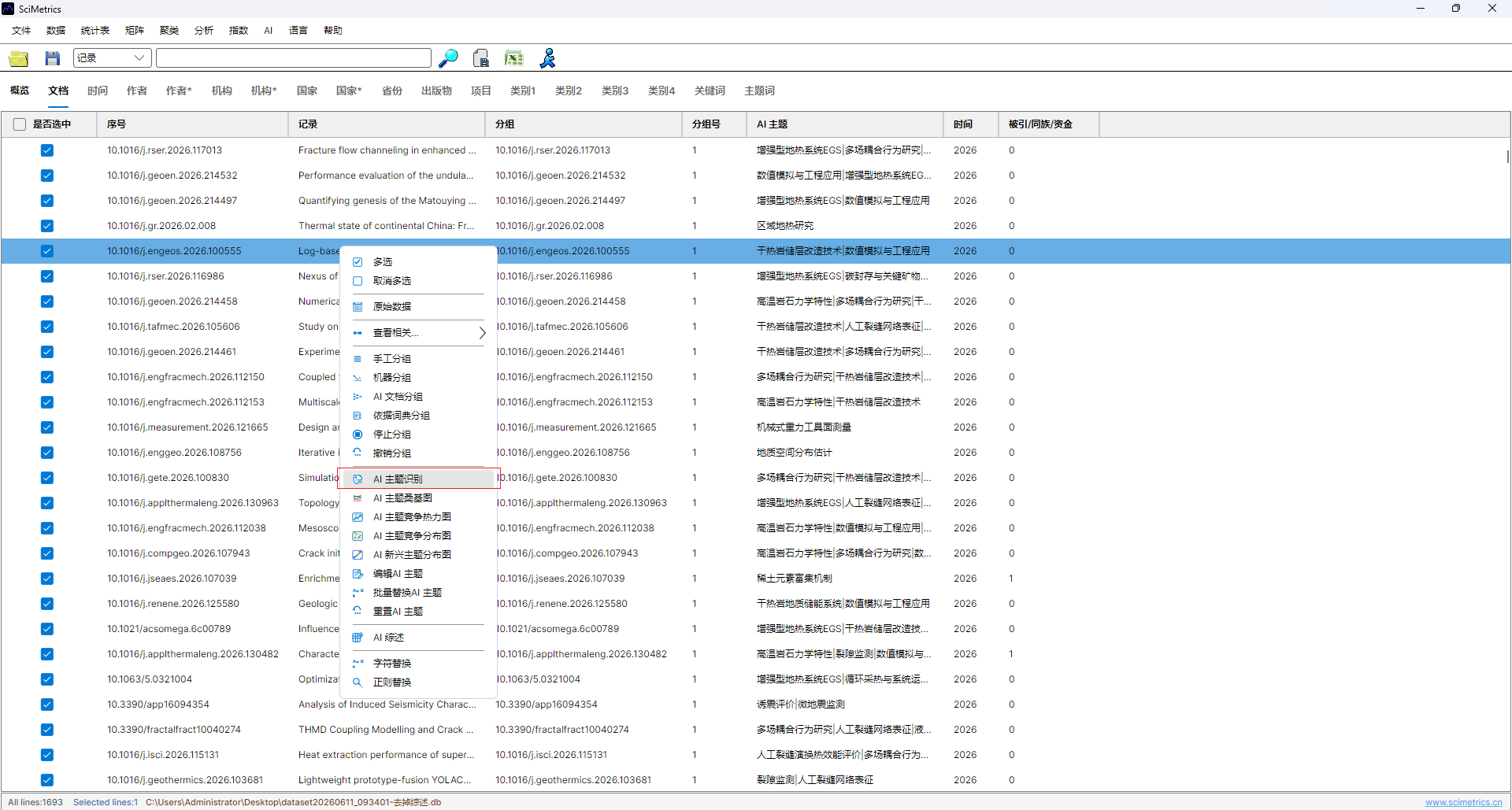
- Complete AI topic identification and review topic names.
- Clean or merge the subject dimension that will be compared, such as institution or author names.
- Decide whether the analysis should use all papers or only selected papers.
Export Competitiveness Indicators
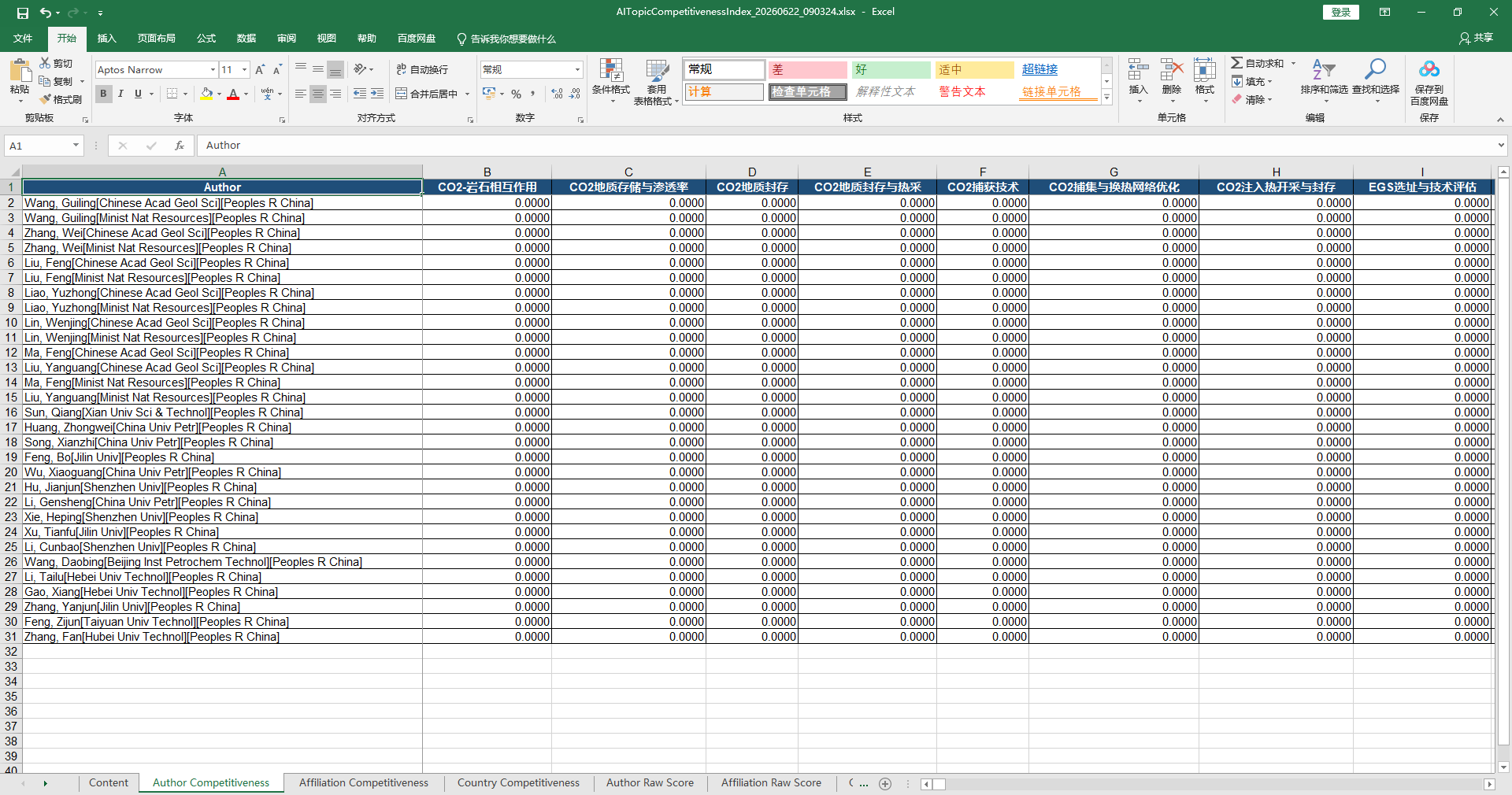
Use the AI topic competitiveness index export before or alongside the visualization. The Excel output provides a reviewable table for topic scores, subject scores, and supporting counts. Keep this file with the visualization so the chart can be checked later.
Build The Distribution View
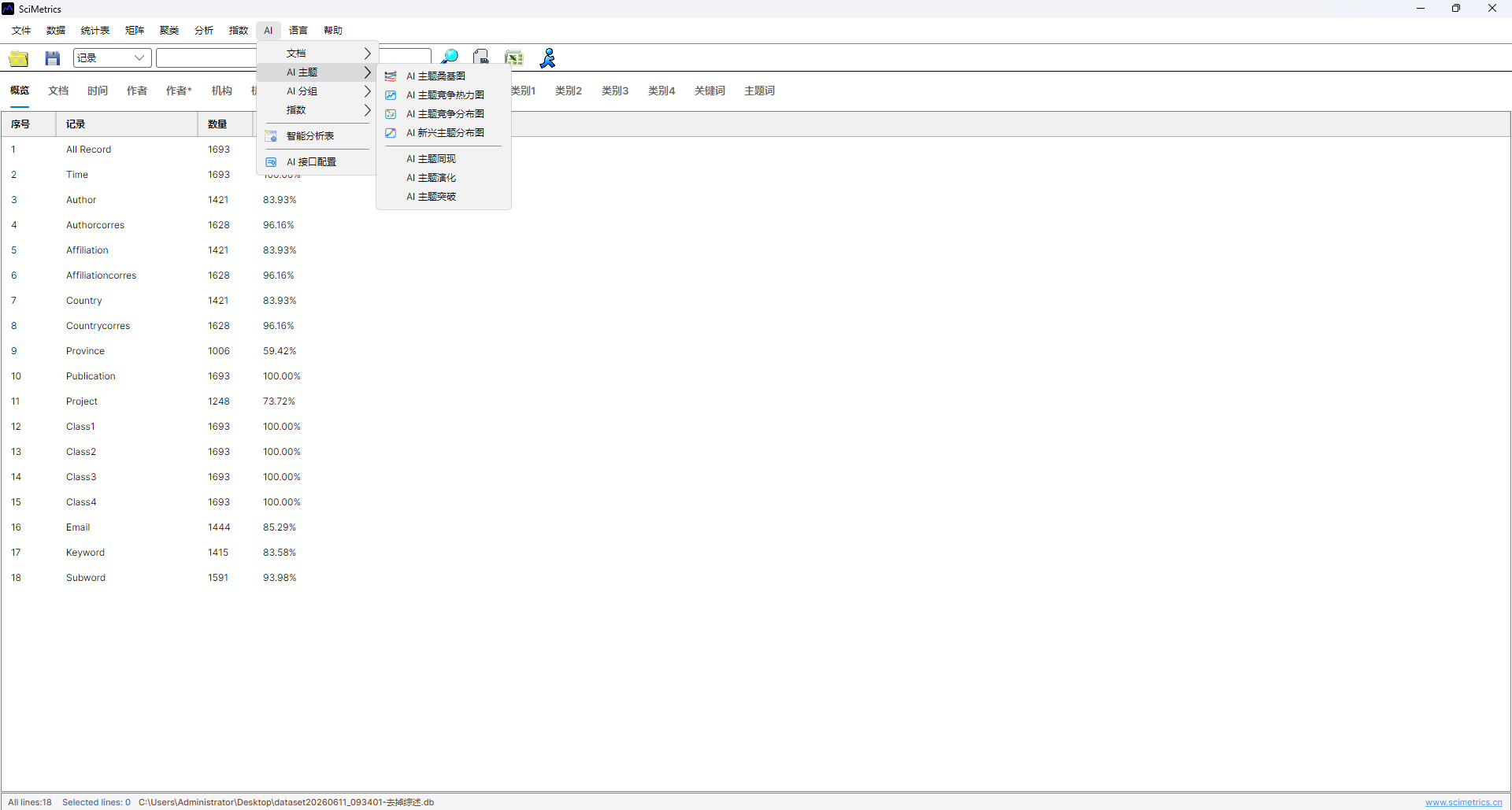
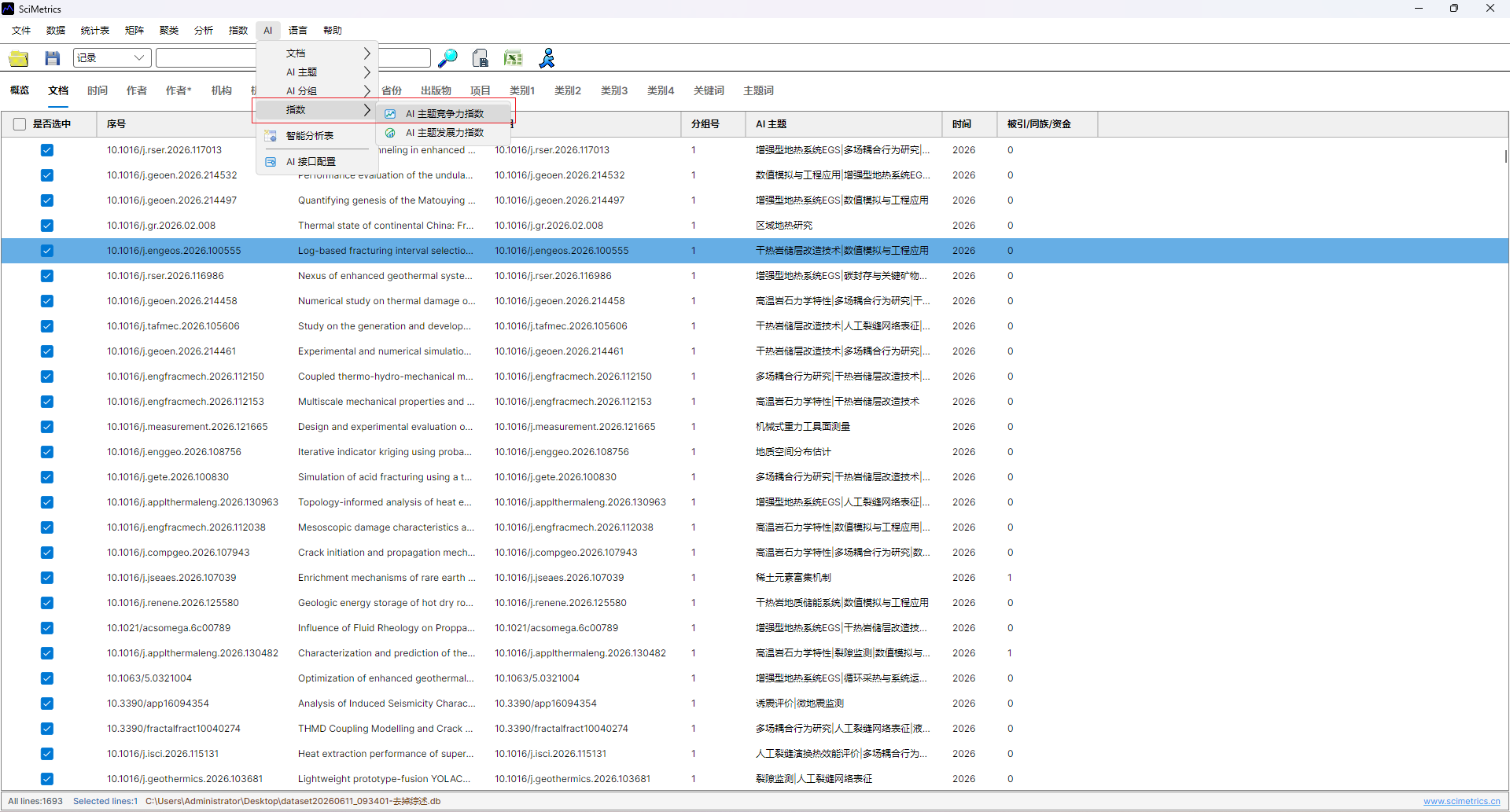
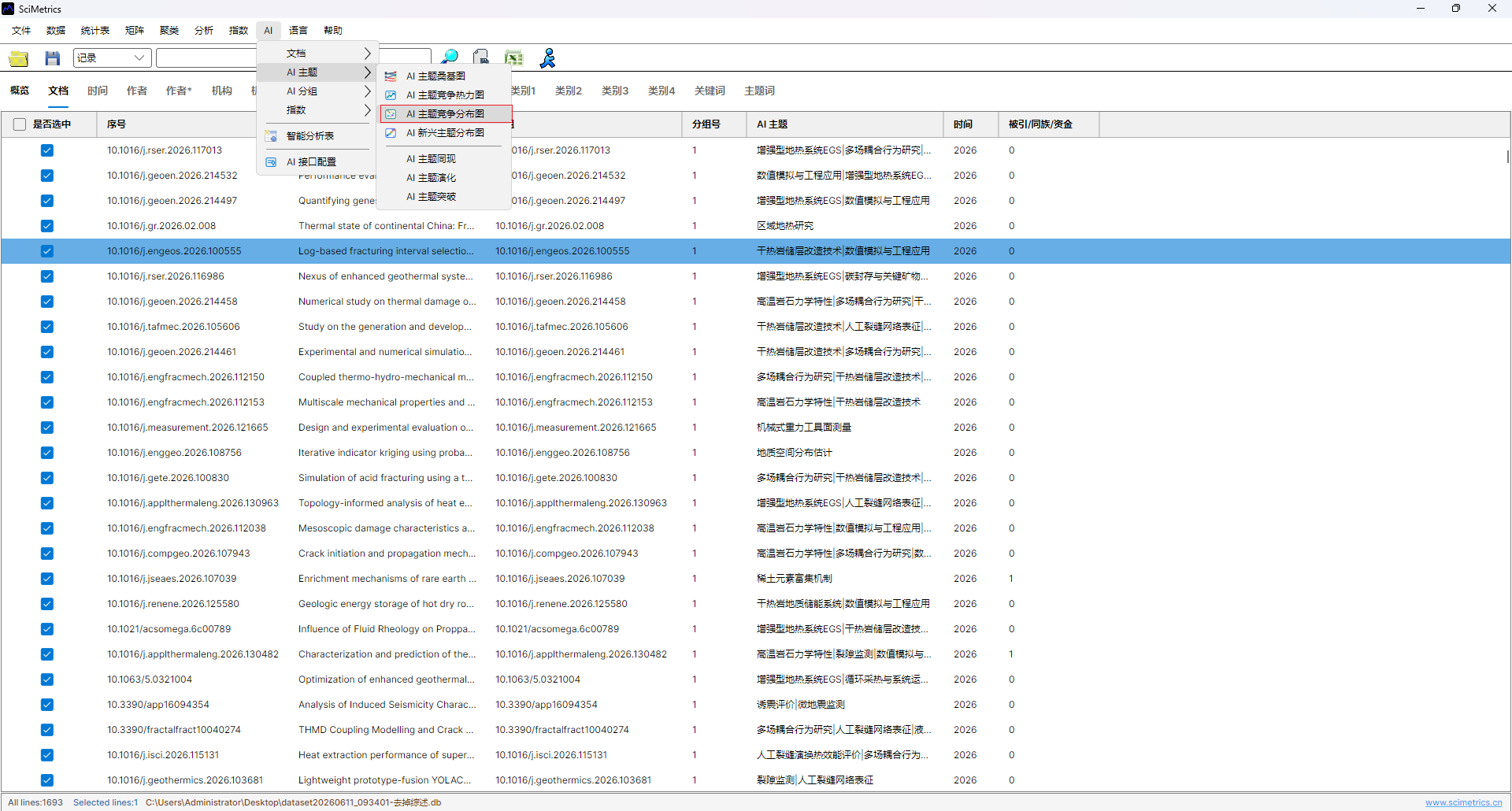
- Open the AI topic competitiveness distribution function.
- Select the comparison subject, such as institution, author, country, or another supported dimension.
- Set the topic and subject limits.
- Generate the distribution map.
- Use the topic list and paper list to inspect the evidence behind a visible cluster.
Reading The Result
The distribution view helps answer where each subject is strong, whether a subject is concentrated in a few topics, and whether multiple subjects compete in the same topic space. Do not rely on position alone; verify the subject-topic relationship with the paper list, the exported table, and the original records.
For formal reports, export both the figure and the Excel data. The figure is used for communication, and the table is used for traceability.
Topic Hull Settings
The competition-distribution view and AI Emerging Topic distribution share the same topic-hull implementation. Membership comes only from existing AI topic labels. Institution or author colors and spatial distance do not regroup nodes, and a topic is not split into multiple sub-hulls, preserving the one-topic, one-outline meaning.
The right-side Minimum Topic Hull Nodes setting defaults to 3 and accepts 2–5. At 2, two same-topic nodes at different positions form a round-ended capsule. At the default 3, two-node topics are omitted. Single-node topics never draw a hull. Values 4 and 5 can hide topics with weak membership counts.
Organic hulls now use rounded paths that remain inside their neighboring boundary segments, avoiding tails on elongated outlines. Padding grows with the largest rendered node and zoom. Borders use a slightly darker shade of the topic fill color. Screen and SVG export share the same boundary calculation, so export does not substitute a different hull.
MCP and Automation API Control
Ask a connected model in plain language:
Use the scim MCP on the current AI Topic Competition Distribution view.
Keep the existing AI topic membership, set Organic topic hulls, and set minimum topic hull nodes to 2.
Export the distribution page to D:\Research\Output\topic-competition-hulls.svg and verify the output file.
The deterministic command is:
{
  "command": "visual.set_ai_topic_visual_options",
  "args": {
    "view": "distribution",
    "topicHullMode": "organic",
    "topicHullMinNodeCount": 2
  }
}
In cycle order, topicHullMode accepts none, natural, organic, and convex; natural is an independent Natural Smooth effect. The toolbar cycles Off, Natural Smooth, Organic, Convex, then Off. Export with visual.export_ai_topic_visual_window. Direct local clients can POST the same JSON to http://127.0.0.1:37618/api/automation/command. MCP users normally do not need to enter the URL or write JSON. The command targets an already open Desktop window.
Interface Screenshots
The screenshots below are retained to verify menu entries, parameter settings, result views, and export locations.